
Cordoba Spain: Beyond the Day Trip

Updated: Sep 1
When most travelers think of Andalusía, their minds think of Seville's dramatic flamenco or Granada's Alhambra. But there is another city that deserves more credit than the better known cities of this Spanish region. After having spent nearly 3 weeks in this city, I can confirm that Córdoba shouldn’t be visited in a rushed afternoon visit. This stunning city along the Guadalquivir River is a living museum where nearly 1,200 years of history come together and it's absolutely worth planning a multi-day stay. If you're a traveler seeking authentic cultural immersion, UNESCO World Heritage sites, and experiences that go beyond the typical tourist trail, Córdoba is for YOU.

Why Córdoba, Spain Belongs on Your Andalusia Itinerary
Córdoba is a place where you can walk through centuries in a single afternoon. During the Islamic Golden Age, this was one of Europe's largest and most sophisticated cities, home to philosophers, poets, and scholars. Today, that intellectual and artistic spirit still pulses through its winding medieval streets.
What makes Córdoba truly special is its position as a crossroads of cultures. Here, Christian, Jewish, and Islamic heritage don't simply coexist in textbooks, but they’re woven into the fabric of daily life. You'll see it in the architecture, taste it in the cuisine, and feel it in the stories locals share over coffee.
For travelers who value depth, Córdoba offers exactly what you're looking for: walkable neighborhoods, world-class museums, culinary traditions, and the kind of unhurried pace that allows real discovery.
The Mezquita-Catedral: A Masterpiece of Architectural Fusion
Let's start with the most famous building! The Mezquita-Catedral (officially the Cathedral of Our Lady of the Assumption) is one of the most extraordinary buildings in the world, and it's Córdoba's crown jewel.
Built originally as a mosque in 784 CE and expanded over centuries, this UNESCO World Heritage site is a stunning testament to Islamic architectural brilliance. When you step inside, you're immediately struck by the forest of red-and-white striped arches (over 850 of them), that seem to stretch endlessly before you. The effect is simply stunning.
What many first-time visitors don't realize is that the cathedral was built inside the mosque in the 16th century, creating an unusual architectural project. While some purists argue this disrupted the mosque's harmony, some find it deeply moving—a physical representation of how different cultures and faiths have shaped this city.
Pro tip for visiting: Arrive early, ideally before 9 AM, when the light streams through the building in that golden-hour way that makes photography (and contemplation) absolutely magical. Avoid midday crowds, and consider purchasing a combined ticket that includes the Alcázar fortress and other monuments for excellent value.
Here is a little video to capture our visit:
The Judería: Walking Through Medieval Jewish Córdoba
This is where Córdoba truly distinguishes itself from other Andalusian cities. The Judería—the historic Jewish quarter—is one of Spain's most intact medieval Jewish neighborhoods, and wandering its narrow, whitewashed streets feels like stepping back in time. For centuries, Córdoba was home to a thriving Jewish community that produced some of the medieval world's greatest philosophers, including Maimonides. Today, you can visit the Synagogue of Córdoba, a small beautifully preserved 14th-century space.
The streets themselves are part of the experience. There's no grand plaza or obvious "main attraction"—instead, you'll discover hidden courtyards, tiny workshops, and family-run restaurants tucked into corners. This is where you'll find the real Córdoba, where locals actually live and work.
What to do in the Judería:
Visit the Synagogue and its small museum
Explore the Maimonides statue and birthplace
Stop for lunch at a traditional restaurant serving local specialties
Simply wander to get lost in the narrow white-washed streets

Córdoba's Legendary Patios: Intimate Courtyards of Beauty
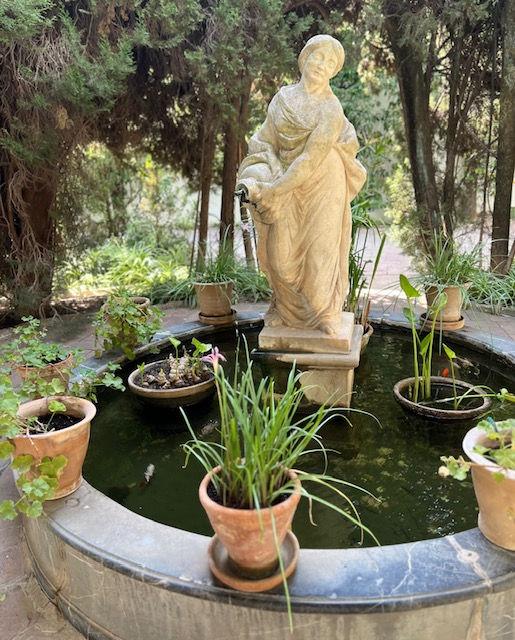
One of Córdoba's best-kept secrets is its tradition of private courtyards, called patios. These intimate gardens, hidden behind unassuming doors, are where families have cultivated beauty and tranquility for generations.
During the annual Patio Festival (typically in the first weeks of May), many families open their private patios to visitors. This is a rare opportunity to step into the heart of Córdoban domestic life. You'll see cascading flowers, fountains, ceramic tiles, and plants arranged with an artistry that reflects Andalusian values of beauty and harmony. It attracks about 1 million visitors to the city every year!
Even outside festival season, several patios are open to the public year-round. The Patio Museum (Museo de los Patios) showcases the tradition beautifully, and several hotels and restaurants have preserved their historic patios as public spaces.
These quiet courtyards are perfect for travelers who appreciate contemplative spaces away from crowds.

Royal Equestrian Shows and Andalusian Horsemanship
Here's an experience that often surprises visitors: Córdoba has a deep equestrian tradition, and the Royal Equestrian School of Córdoba (Real Escuela de Arte Ecuestre) offers spectacular shows that rival anything you'll find in Seville or Madrid.
These aren't just horse shows, but artistic performances blending classical horsemanship and flamenco. Watching a perfectly trained Andalusian stallion execute intricate movements to music is genuinely moving, and the venue is intimate enough that you feel connected to the performance.
Book in advance, and definitely book the covered premium seating (with misters) if you're visiting during Córdoba's hot summers. NOTE: no video or photography is allowed during the performance.
Best Times to Visit Córdoba
Spring (April-May): This is the sweet spot. Temperatures are mild (65-75°F), the Patio Festival brings the city alive, and wildflowers bloom throughout the region. Tourist crowds are present but manageable.
Fall (September-October): Similar conditions to spring, with slightly fewer crowds. September can still be warm, but October offers perfect wandering weather.
Winter (December-February): Mild by northern standards (45-55°F), but some attractions have reduced hours. The Christmas season brings festive atmosphere, and you'll have monuments largely to yourself.
Summer (June-August): I can confirm first hand that Córdoba gets hot, very hot! If you visit, plan indoor activities or a siesta in the afternoon and explore early morning and late in the evening. Some businesses will be closed for the month of August.
Ready to Discover Córdoba's Hidden Gems? Please reach out to set up a consultation to plan your customized trip.


Comments